Islamic Calendar

Saturday, September 18, 2010

The story about 3 alien? (what make us human version 1.50)


Not too long ago three aliens descended to Earth to evaluate the status of intelligent life. One specialized in engineering, one in chemistry and one in computation. Turning to his colleagues, the engineer reported (translation follows): “All of the creatures here are solid, some segmented, with capacities to move on the
ground, through the water or air. All extremely slow. Unimpressive.” The chemist then commented: “All quite similar, derived from different sequences of four chemical ingredients.” Next the computational
expert opined: “Limited computing abilities. But one, the hairless biped, is unlike the others. It exchanges information in a manner that is primitive and inefficient but remarkably different from the others. It creates many odd objects, including ones that are consumable, others that produce symbols, and yet others that destroy members of its tribe.”


“But how can this be?” the engineer mused. “Given the similarity in form and chemistry, how can their computing capacity differ?” “I am not certain,” confessed the computational alien. “But they appear to have  a system for creating new expressions that is infinitely more powerful than those of all the other living kinds. I propose that we place the hairless biped in a different group from the other animals, with a separate origin, and from a different galaxy.” The other two aliens nodded, and then all three zipped home to present their report.


What so special about human? Again, because of our brain. From the post "what make us human", the 1% or 2% difference, they differ genes in brain developments. But scientist not fully understanding the role of genes differences in human can give significantly give the brain has ability that only human race have. The gene encoded for protein no longer the answer, may be non coding DNA, perhaps RNAs.

In Islamic perspectives, Human are the very special creatures that create as Khalif (leader) and the give the very special "nikmat" which is the intelligence. In Al-quran, always repeat this phrases أفلا تعقلون reads "Affala Ta'kiluun" which means Don't you think?. So Islam teach people always to use their intelligence.

 Key ingredient of human mind

 The four traits below distinguish the human mind from those ofanimals. Uncovering the origin of the human mind will require explaining how these unique properties came about.

Generative computation enables humans to create a virtually limitless variety of words, concepts and things. The characteristic encompasses two types of operation: recursive and combinatorial. Recursion is the repeated use of a rule to create new expressions. The combinatorial operation is the mixing of discrete elements to engender new ideas.

Promiscuous combination of ideas allows the mingling of different domains of knowledge—such as art, sex, space, causality and friendship—thereby generating new laws, social relationships and technologies. Mental symbols encode sensory experiences both real and imagined, forming the basis of a rich and complex system of communication. Such symbols can be kept to oneself or expressed to others as words or pictures.

Abstract thought permits contemplation of things beyond what we can see, hear, touch, taste or smell.

Hobbit from Indonesia- human evolution need revision


In 2004 a team of Australian and Indonesian scientists who had been excavating a cave called Liang Bua on the Indonesian island of Flores announced that they had unearthed something extraordinary: a partial skeleton of an adult human female who would have stood just over a meter tall and who had a brain a third as large as our own. The specimen, known to scientists as LB1, quickly received a fanciful nickname—the hobbit,like a race in Lord of the Ring. The team proposed that LB1 and the other fragmentary remains they recovered represent a previously unknown human species, Homo floresiensis. Their best guess was that H. floresiensis was a descendant of H. erectus—the first species known to have colonized outside of Africa. The creature evolved its small size, they surmised, as a response to the limited resources available on its island home—a phenomenon that had previously been documented in other mammals, but never humans.


Scientists initially postulated that H. floresiensis descended from H. erectus, a human ancestor with body proportions similar to our own.New investigations show that the hobbits were more primitive than researchers thought, however—a finding that could overturn key assumptions about human evolution.


H1N1 is not new virus?

H1N1 swine influenza gives great threats to human races nowadays. Its don’t have any cure yet. Believe me or not the H1N1 is not a new virus. How come?

Let have closer look on its structure. Its surface protein, hemagglutinin (HA) — which spikes cells and starts an infection— closely matches the HA in the H1N1 virus responsible for the 1918 pandemic. Separated by 91 years, the two strains of the highly mutable virus ought to be vastly different. This newfound similarity answers many mysteries about the 2009 pandemic, including why it largely spared the elderly.

The 1918’s virus evolved quickly in order to survive to different form of virus and lastly to be H1N1 virus that cause human pandemic.

Figure 1:  Descendants of the 1918 virus dodged antibodies by mutating (red) the tips of the HA to change shape and hold glycans, but the 2009 pandemic strain (far right) turned back the clock

This finding give scientist new way in curbing the next pandemic, so to make sure this not happen again, research on how the possibility of the virus mutate, and how they cause disease and how to cure it must be done. But I have bad feeling about these researches,   which will be underground research to build lethal bio-weapon, if human understanding the behavoiur of virus and how to create a new disease.

Thursday, September 16, 2010

Di Hari Malaysia Ini, Marilah kita mengenang peristiwa Sabra dan Syatila


Tangal 16 september 2010, sudah 47 tahun penubuhan gagasan Malaysia. Pahit getir, suka duka dalam penubuhan negara bangsa Malaysia ini. Tarikh ini harus diingat sebagai tarikh keramat bagi setiap warga Malaysia, sama pentingya dengan 31 ogos.

Tetapi jangan dilupa, sebagai negara Islam, tarikh ini merupakan tarikh yang tragis, lagi menyedihkan iaitu pada tanggal 16-18 September 1982, berlaku peristiwa yang menyayat hati, iaitu penyembelihan beramai-ramai umat Islam di kem Sabra dan Syatila.

Dua peristiwa yang amat bersejarah ini, marilah kita menyambutnya dengan doa dan solat hajat agar negara Malaysia kekal aman dan rakyatnya bersatu atas nama Islam serta kita memohon agar Allah memberikan bantuan pada para mujahiddin seluruh dunia dalam menegakkan syiar Islam.

Islam akan bangkit di negeri-negeri timur dibawah naugan panji-panji hitam. Duhai bangsa seagama ku, hidup ini adalah perjuangan, jangan lah kalian lena dan alpa dengan keseronokan dunia yang penuh tipu daya. Berjihadlah di jalan-Nya.

Wednesday, September 15, 2010

The new construction of coral family tree and shows the ocean's evolutionary potential


The deep sea may not seem like a crucible of evolution. For me, according to Darwin, evolution is correlate to natural selection. Compare with the organism living in land and shallow seas, they may have more competition to survive especially when human take control in the world — cause many pollution and destruction. So evolution rates are increase in the name of survival.


But, to the surprise of biologists, a new construction of the coral family tree suggests that evolution proceeds at full bore in waters well below where sunlight penetrates. Moreover, some coral diversity may have bloomed there first, before spreading coastward—the reverse of what has long been thought. “As people look in the deep sea, they are finding much more diversity than they expected,” says Clifford Cunningham, an evolutionary biologist at Duke University in Durham, North Carolina. “We’re just at the very beginning of understanding deep-sea evolution.”

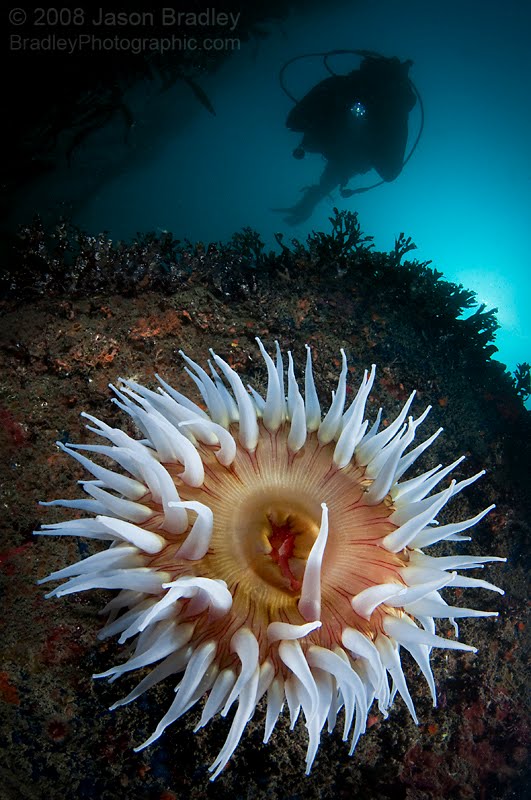
Besides that, the evolution potential not only seem in coral, but in other deep sea organism too. Marymegan Daly, a systematist at Ohio State University, Columbus, and co-coordinator of the Cnidarian Tree of Life project, has found a similar pattern among the sea anemones she’s analyzed. “We see lots of radiations of deep-deep sea forms,” she reported. In short, concludes France, “we can’t say that the deep sea is a boring
environment in terms of evolution.”

I think this are the beginning of the new saga in evolutionary study to understand the evolution pattern in deep sea.

Debates about how eukaryotes get the mitochondria.

 I would like to share with you the debates about eukaryotic evolution. The evolution of eukaryotes is something very hard to understand the process of evolution. One of them that always debate, how they acquired the membranebound organelle, mitochondria. Mitochondria produce energy in nearly all eukaryotic cells and regulate cell metabolism by controlling the flow of factors such as ions, amino acids, and carbohydrates between themselves and the cytoplasm. Mitochondria evolved from a bacterial endosymbiont (an α-proteobacterium), and this process depended on the establishment of new pathways that facilitated the import of proteins into and across the double membrane (inner and outer) of the ancestral endosymbiont. Herein lies a debate: How did the process of protein import in mitochondria—which facilitated the evolution of this organelle, and thus, eukaryotic cell evolution— arise? Was the process driven by the ancestral host cell or by the prokaryotic endosymbiont, or by both?


Recently, Gross and Bhattacharya discussed the possibility that evolution of protein import into mitochondria was driven by the host cell (see the fi gure).In this paradigm, to capitalize on energy production by the ancestral endosymbiont, a protein sorting and importing mechanism was necessary to relocate host cell proteins to the endosymbiont. Thus, in the earliest evolutionary stages of mitochondria, host proteins were “imposed” on the ancestral endosymbiont.


It was argued that because the endosymbiont’s outer membrane had greatest access to host factors in the cytoplasm, evolution of mitochondrial protein import began at the outer membrane. Once established there, host proteins could then gain access to the intermembrane space and the inner membrane in an “outsideto- inside” trajectory of evolution.
Two views of mitochondrial evolution. The “Inside” view of the transition from intracellular bacterium to mitochondrion acknowledges that the ancestral endosymbiont’s genome encoded protein complexes (SecYEG and YidC) that facilitated the assembly of bacterial proteins into its inner membrane (e.g., metabolite carriers) and outer membrane (the bacterial β-barrel protein BAM). An early outer-membrane protein of the TOM complex (Tom40) may have arisen from a bacterial β-barrel protein with affinity for basic, amphipathic amino acid sequences on host cell proteins. Progenitors of modern protein import components (TIM) were also encoded by the endosymbiont’s genome. The “Outside” view proposes that proteins of the ancestral host cell were imported into the endosymbiont. It assumes that the endosymbiont’s genome is reduced (and unable to encode progenitor proteins of the import machinery). In this case, some host cell β-barrel protein is imposed into the endosymbiont’s outer membrane. It then facilitates the import of other protein import machinery components from the host cell.


To read further please refer this article on Science Magazine 5 february 2010 titled "Tinkering Inside the Organelle".

Monday, September 13, 2010

Understanding nanobacteria, understanding disease, perhaps more understanding genetic

Scientists debate about what are classification of nanobacteria, is that a new class of life or just a particle from bacteria or another life form. Finish researcher Olavi Kajander and Turkish researcher Neva Citcioglu, Universiy of Kuopio, Findland  confirm that the nanobacteria is a living entity.The scientists assigned their discovery, which they named Nanobacterium sanguineum, to a subgroup of bacteria that includes Brucella and Bartonella, both of which have been shown to cause disease. The Finnish group also noted unusual features of the nanobacteria, including their ability to change shapes in culture, a property known as pleomorphism, which is a rare trait in living organisms. The nanobacteria were seen to change from small spherical bodies to films and clumps of mineralized material. The mineral in question turned out to be hydroxyapatite (apatite), a crystalline complex of calcium and phosphate found everywhere in nature, including mammalian bones as well as the shells of some invertebrates.


The small, round nanobacteria were not only covered by apatite walls but were often found hiding within large “igloo-shaped castles” or “dwelling places,” the researchers wrote.

Attempting to identify the source of nanobacteria, the Finnish team was surprised to find the creatures in most animal and human body fluids they examined—blood, saliva and urine, among others—and concluded that the tiny bugs posed a risk for diseases involving abnormal mineral agglomerations, such as kidney stones. Eventually conditions linked by various researchers with nanobacteria would expand to include many types of cancer, atherosclerosis, degenerative diseases such as arthritis, scleroderma, multiple sclerosis, peripheral neuropathy, Alzheimer’s disease, and even viral infections such as HIV. Initial studies by the Finnish team had shown that 14 percent of healthy Scandinavian adults tested positive for antibodies against nanobacteria. Other scientists, such as Andrei P. Sommer of the University of Ulm in Germany, would later promote the idea that nanobacteria behave as transmissible pathogens, incriminating nanobacteria as a global health hazard.

Despite all these frightening implications, in many ways nanobacteria fulfilled the wildest dream of every scientist. Their very primitive nature, unusual characteristics and ubiquitous distribution suggested that nanobacteria might help explain the origins of life—not only on Earth but elsewhere in the cosmos.

Nanobacteria is just a new field to decipher the DNA code and could reveal the secret of life.